lundi 8 septembre 2014

36. Veronica Décide de Mourir

(well I wished my comeback book was something better than this.)


Name : Veronica décide de mourir
Writer : Paulo Coelho
Publishing year :  1998
Language : French
Type : Recommended, Novel
Recommended by : Insaf Bouqrou', Inas Laghdess
Estimated time : about 7 hours.
Main themes : Insanity, psychology, coming-of-age, liberation.
Recommended for : Hardcore Coelho fans only.
The book in a few words : First world problems meets the Alchemist.
The synopsis : A perfectly fine young lady decides that she's bored of life and tries to commit suicide, but she didn't die and she only has 5 days to rediscover life and what she's missing out on and feel regret for being a stupid perfectly fine young lady.

The Rating : Disappointing 4/10

The Review :
My oh my.
Paulo Coelho is such a thorny writer to approach. He's venerated by many "readers" and hated by other readers (notice the use of quotes). I like his comparison to Justin Beiber : Many people hate him without even listening to his music, many people hate him after listening to his music, but many, many people (impressionable 13 years old girls) think he's the best singer in the universe of all time. Because of this, when you "hate on him" you get waves of angry comments for being mean for no reason. "His music gets Grammys!" they say, and there is no tangible proof that he's overrated and he sucks and the attention he gets should be equally distributed on far more talented people who really deserve it. Defining "more talented" and "deserve" is another problem, but everyone on the other side of the fence know what it means. You just feel those people need someone who show them the light and direct them to the better ways of life.

Now this is a long paragraph for a writer of whom I've hardly read two books (one of them twice). I'm no expert in Coelho and I ain't got no time to spend on reading his books after being disappointed by this one. But other people with more time in their hands did, and they don't seem to differ from the aforementioned groups : Either hate it for being overexposed and overrated, or revere it and having all his book read and reread and shared as cute, inspiring quotes.
Before reading this book, I didn't want to put myself in any of the previous categories, I only read the Alchemist (which I liked moderately but I only gave it a 4/5 for being the first novel I've read) and I didn't want to go with the flow and pretend to be an illuminated reader who sees right through his repetitive malarkey and consider people who do like him to be shallow, inexperienced readers. (I might as well belong to those for all I know).

But now, I read Veronica, which is claimed by many to be his best work (alongside his "masterwork", the Alchemist) and a complete change of tone in contrast with many of his other books that kind of feel the same (uh oh).

So I held my hope high and opened it with all the good intentions, and I really wanted to give him a try, maybe he's greater than the sum of the inspirational quotes everybody seems to relate to.

First thing I notice: Dry style. Some may mistake that for being an "easy" or even a "smooth" read, but it is not. It's just .. dry. Oversimplified, dry writing style. It feels like you're reading an average article from a newspaper, and it's not a good thing.
There is the Minimalism that I adore (and I think helped the Alchemist to feel bare and genuine), but it's not even that. It's just a tasteless, colorless steam of words. What's more, it wasn't what the story required or needed, it was just a choice of the author. I believe that a good use of imagery and description would have helped the package in some way, but what can I say.. Coelho is a crowd-pleaser (yes, I meant that in a very negative way). In the same vein, metaphors and allegories, when feebly used, were spoon-fed to the reader. There is not figuring out or "Aha!" moments, only direct, in-your-face obvious symbolism that is explained many times throughout the book, in case the very sophisticated intellectual readers of Coelho didn't pick up on them if they weren't attentive enough the first ten times they were explained (and not dumb enough, God forbid).

Next was the heroine. And for a book to be named after and centered around one character, she was such a disappointment. I couldn't put my finger on why she just was irritating for me to try to connect to, but I guess I ultimately figured it out: she's rushed. It feels like the author didn't have an exact portrait of her before he started writing, he just kept using her as a plot device. So she was first this blatant ungrateful first-world woman who didn't have any problem except maybe being in a Coelho-created universe, she was bored and she decided to die. She decided to die because she was a pretty woman who could have all what a pretty woman can have from this life (work, love, marriage, eventual divorce (?), settling, children, all the "normal" pleasures of love), and that wasn't good enough for her.
But she's called a smart person throughout the novel, so she could have just planned a journey to change her life or live an adventure like a smart, self-conscious person would do (I will read you, Eat Pray Love), but she didn't. Veronica decided to die, decided that nothing in life is ever gonna be of interest for her although she never quit her little place and never tried to change her routine. She gave up, and that's a stupid cowardly thing to do (and she thought she was very courageous!). Now before anyone say that I don't get the mind of a suicidal or a depressive person, I can say she wasn't one. She's not a "messed up" person. She was very ordinary in every aspect of the word for the rest of the novel. She wanted to live right after meeting Zedka, which is, clue for the clueless, was becoming a friend of hers. Why didn't she try to get friends before? Beats me. She then clung to dear life like the most normal people do, and while that might have served the "message" of the book (rant below), it harmed the character integrity. And the "sexual awakening" was so .. impromptu. It popped out of nowhere, the setting was bad, the motive was nonexistent. It was  pulled out of the bucket to push once again the message of the book, but it was so badly done. (For notes on how to do it correctly, see Flowers for Algernon Charlie's second "phase of growth". The whole book built up to that part, and it made perfect sense. Here we see a girl who experienced the limits of her sexual desire on her deathbed because an old woman told her about it in a meditation session .. COM'ON!). I have many inconsistencies to point out about her that I won't mention -almost every chapter draws her with different colors- which made any growth of the character seem more like a forced step down the archetype of Santiago, the protagonist of the Alchemist : a person who's lost at life, have a faithful encounter with a life changing figure (the doctor/the king), goes on a journey of self-discovery and more fateful meetings, and then achieve the Magnus Opus and become one with the universe and reaches its human peak and then find a materialistic treasure (the gold/the very pretty boy who understands you. And that's another point, she didn't find just any love, but one with a very hot dude who's an artist and is very understanding and deep. Too much for a spiritual message :v).

Secondary characters got all their half-witted full 5 pages!! I hoped they had more elaborate lives, and not all of them were pretty much .. normal poeple. Before you jump and say 'EXACTY! That's the poooiiiinnt of the book!!!!", I take back what I said. They're normal people in our definition of insanity, not the book's (that's trying so hard to rebrand insanity as "just like you, but different". Really insane poeple are nothing like the ones the book cherrypicked, but more like the many others that didn't pay attention to Veronica and stayed in the backgrounds doing backflips and eating their snot). They were all melodramatic, and every page screamed "please feel sorry for us! #CrazyPeopleAreJustLikeYou"). Zedka was almost given depth but then she was tossed away like my hope of this book being any good. The rest was truly and utterly meh, with Eduard's story being "please let me fly with my own wings" typical and Maria's mixture of many half-baked ideas (I don't know why he bothered to make up such a weak background story for her: for example he didn't make any use of her being an attorney at all except for trying to sound clever in one useless line by the end of the book, ha).

"Vitriol Or The Bitterness" was the worst combination of concept/nomenclature I encountered in literature so far. The notion of it is hilarious (I don't think laughter was the intended effect, but I hope sounding sophisticated wasn't too).  To name an "ethereal substance that slowly pushes people to die of bitterness and boredom" after an instant-effect poison that people used to assassinate is not my idea of good symbolism. Anytime he used that forced word, I chuckled.
(ps. Libido was never thought of as a substance. No surprise it wasn't isolated in laboratories, Einstein).

And finally, the message.
What I gathered from the book -and let's be honest: Coelho is pretty known for resonant, life-changed messages- you must close it thinking :
"There is no such thing as sanity, only a law of majority which dictates that wearing a tie is a hint of fashion taste and not a self-strangling useless piece of cloth. Sanity is just one form of accepted insanity that got adopted by many people. There is no such thing as reality, only a percieved version of it, and is generally one that is not in our element. Drop both those illusionary notions and live as an animal free Man, enjoy your life, please your body and don't give two damns about people around you because they're all crazy too, only in a uniformed kind of crazy. But also seek the love of others, and see death as a gateway to life and life as an early stage of death, but never fear them. Embrace your inner fool, leave your job, and live on love and fresh air and wine you can hardly afford".
It would have been such a bombarding, bigger than life message if it wasn't very self-asserting, self-important and finally bombastic.
It is presenting a very dumbed-down vision on life, making it sound as if Veronica and her lover boy won't eventually need to work in a 8 to 5 mind-numbing job to afford their champagne under the stars, and that he won't get fits of schizophrenia when she'll get old and remind him of hell rather than heaven, and that she won't tell him to notice her more than his Visions of Paradise he's spend all day working on. It implies that life is no more than a first-world problem that would be fixed by trying the new and exploring the forbidden.

If only the book ended with her actually dying and being remembered by every fool she encountered (let's assume for a second that she's not a shallow character but a one capable of touching souls and not only her body), and then making the point across that there is Life in Death as the doctor metaphorically suggested, that people change perspective and get insight from the passing of a dear one and that one's life doesn't stop when he or she dies, whether he or she believes in an afterlife or not. They remain in the hearts of those whom they inspired by living through the repetitiveness of life and the tricks of the minds and the bad turns of wind, and that only, is worth living for. Or something.

I don't feel like writing about this book anymore.

Favorite passages : 

I wanted to register the most pretentious lines and quote them all here back to back to give my impression of it as I was reading it. Because there were too many, I gave up.

I didn't have any favorite passages. Maybe the one he was talking about himself and his friend who told him about Veronica, that wins the most unwarranted chapter in the book.

samedi 28 septembre 2013

Summer Project Report #3

The "project" has come to an end, so did the Summer holiday. It's been fun, really, and I've more books in this short amount of time than pretty much my whole life, so that does say something about how terrible of a literate person I am.
Anyway ! For the final Report I've gathered the last 15 books (and mini-books) that I've read during pretty much the last week of August and the first week of September, I didn't reach my goal of reading 50 books (because I pretty much didn't read for more than a month :v), but still, I'm proud of this first accomplishment, way to go !

21. Bridge to Terabithia :


Author : Katherine Paterson
Themes: Friendship, Fantasy, Alienation.

Rating : 9/10

Mini-review : 
For a short novel (about half the size of a normal novel), this work of fiction accomplishes effectivelythe mission of a story : Give us a world to live in and people to befriend while reading, and a sentiment of sorts when finished. Almost-spoiler alert, this novel might hit you in the guts.


22. الخبز الحافي :


Author : Mohamed Choukri
Themes: Coming of age, family, society, loneliness, suffering..

Rating : 5/10

Mini-review : 
As I finished this autobiographical work, I really wanted to hate it. It had all sorts of things I didn't appreciate in the stories I enjoy : a dislikable protagonist (The author, Choukri), an overly-tarnished world, a linear story with no real intrigue (we can blame that on the fact that this story is autobiographical, but then again, why would you write you're story if it's not intriguing ?), bad writing style (not only unnecessary vulgarity, but also unnecessary vulgarity), slobby supporting characters and just a general growing feeling of disgust throughout the story. I believe that it's what the author want (an "ugly" story, if the term permits), but that was no excuse for the lack of plot integrity. Moreover, I didn't express any feeling towards the character(s) at all, except ar the end, which justifies my not-sure-what-to-think 5/10. I felt finally that the author, amidst his fully-blown Oedipus complex exposure, was on a quest of growing, but surprisingly he never took one step towards that end. The last chapter, though, felt like a miscreant's prayer, a moment of repentance and a light regret, although I'm not sure it really was.
I would have gone on trying to explain to myself why did I fail to put my hand on what irks me about this book, but this is a mini-review and I'm not even sure whether it would be of any help at all.
(Also, why the heck almost every moroccan who reads claims this to be the OMG BEST BOOK EVERRRR!!?)


23. The Rape of the Lock :
24. Al Aaraaf, Tamerlane and other minor poems


Author : Alexander Pope, Edgar Alan Poe
Themes: Diverse ?

Rating : 7.5/10

Mini-review : 
I joined those two reviews for two reasons : One is that obviously I'm lazy, and secondly that it almost felt the same. Poetry is grotesque world that still refuses to open the doors for me as a reader, and I sure don't have the patience yet to "take my time" and meditate the subtle hidden beauties of this art. Those two collection of poems made the same impression on me : Sublime at times, lacking distinction at others (especially after you get used to the poet's style). Also, weird mythological references aren't my cup of tea, for the time being.
Beautiful texts nonetheless.

25. الأيام - الجزء الأول :


Author : Taha Hussain
Themes: Childhood, life in the country, Knowledge, societal merit ..

Rating : 8/10

Mini-review : 
I had high expectations on this book because it was one that I knew for a log time and never had the time to read. Unlike Choukri's autobiography, Taha Hussain's vibrant portrayal of the characters around him (he never quite get in the spotlight) made the story worth reading and engaging. Since we get to see the characters from his perspective (he who is blind, accidentally), we get to experience many highlights of his life almost realistically, without too much distance that the previously-cited author does. You get to like the little Taha, or even sympathize with him and then believe him as he guides you around his pitch-black world.
I need to read the sequels, too.

26. Grace :


Author : James Joyce
Themes: Society, life, religion,

Rating : 8.5/10

Mini-review : 
As my first Joyce experiment (who is one of the most acknowledged/controversial writers out there), I can't say I was disappointed in any way. For a very short story, there is barely any explicit story at all. The plot takes too long to unfold and in the end, hardly does. The writing style was quirky and that's the only word I can think of to describe it. There was a subtlety in the way the story is told and the characters are presented and animated, and I silently enjoyed it. I'm not even sure what was that was really all about, thanks to the prompt ending, or rather stopping, of the little tale.
I said it before and I'll repeat it: I love short stories.


27. How to know if your cat is plotting to kill you :


Author : The Oatmeal
Themes: Cats and their wondrous lives.

Rating : 7.5/10

Mini-review : 
That's almost blatant cheating, because this wasn't actually a book, but rather a .. I don't know. If the title isn't informative enough, I don't think my review would be either. For some very silly comedy and some so-stereotypical-it's-funny jokes about cats, this book will please.

28. The Alchemist :


Author : Paulo Coelho
Themes: Destiny

Rating : 8/10

Mini-review : 
Paulo Coelho, here we meet again.
After more than six years of my reading of the Alchemist for the first time (in arabic), I chose to repay it a visit. While some claim it to be one of the most wonderful awesome things that have been ever written and can't be topped, I beg to disagree. I was one of those people that believed that this book is of enormous depth and very maturely laid but I am no more. Let alone the fact that the translation I read was as inspiring as a plastic bag, the story itself didn't hit me hard in any way. After I saw a variety of media that uses the same raw material (inspiration off mysticism and alchemy is the broad sense), I can freely take off the point of originality too. What we are left with is a story that pushes itself forward to an ending that doesn't surprise nor inspire only after ONE READING. I can't say it's a bad novel because it's by no mean that. I'd rather say, personally, I think, it's one overrated novel. And since judging Coelho's works is a requirement to join the "readers" subgroup, I need to read more of him to have a more definite idea. I hope there's more tricks in his bag.
Side note : This was the first "grown up" book I've ever read so .. thanks Paulo ?

29. رمل و زبد :


Author : Gibran Khalil Gibran
Themes: Misfitting quotes.

Rating : 3/10

Mini-review : 
What do we do with phrases we think sound cool but don't quite fit any context whatsoever ? Put them in a book of course.
3 to 10 is about the ratio of decent to what-are-you-trying-to-say-goddamit quotes. I had all my high expectations because this guy can write marvels (Al-Mawakib, anyone ?), but this book really fall short in the worst of ways. I forgot to keep some real quotations from the book to show how hard it tries to be abstract and allegorical and whatnot, but in the end, well, you get a thing that doesn't look like anything.
Read only if you're a hardcore GKG fan, maybe you'll understand the magic that is beyond my average sense of things.

30. The Two Drovers :


Author : Sir Walter Scott
Themes: Honor, Friendship

Rating : 7/10

Mini-review : 
Again, another cheating attempt. This is yet another short story (I like them, don't judge) that doesn't qualify to be a book, but whatever.
As you can clearly see in the themes, the short story goes straight to the point. The dominant themes in the short story are friendship and Honor, those being quite the only themes in the registry of many classical writers. Short stories are cool because they just give you a point. Whether it's a starting or a finishing point, you decide. Simplistically, this is the story of two hot-blooded friends who turned against each other for a vain misunderstanding, and the thing ends on a tragedy. I found the concept quite bizarre, but after I read Romeo and Juilet (see below), I starting seeing the point of it: People of the olden times LOVED honor, lived for honor and died of/for it. This worship of Honor can be taken to some hilarious proportions.
The language is quite challenging too, both for using old phrasal structures and different English dialects (Old English and Scottish), and I didn't really care enough to look up every other word.
The ending was the good part.


31. الكتاب الأخضر :


hhhhhhhhhhhhhhhhhhhh

Author : Mu'ammer El'Gaddafi
Themes: hhhhhhhhhhhhhhhhhhh

Rating : 5/10

Mini-review : 
hhhhhhhhhhhhhhhhhhhhhhhhhhhhhhhhhhhhhhhhhhhhhhhh
also hhhhhhhhhhhhhhhhhhhhhhhhhhhhhhhhhhhhhhhhhhhhhhhhhhh
But seriously, seriously hhhhhhhhhhhhhhhhhhhhhhhhhhhhhhhhhhh.
Ehem, okay .. This book is very serious. It's SO serious it's claimed by some -the author, mainly- to be of prophetic aspect, almost a revelation, a human feat, a tour de force, a magnificent work of philosophy, sociology, politics, pantology, ecology, pathology, psychology, psychosis, analysis, economy, dichotomy, anatomy (srsly, anatomy). It's a panacea for all human struggle, and some more.
SO rightfully named by the author The Third International Theory (??!).
I can't use words to describe what the book is because I'll never be fair to such grand heights of wisdom, wit and wizardry. Just go read it, it will blow your mind in many ways (for example, have you ever thought that democracy IS dictatorship ? Well yeah, take that Obama).
The only disappointing thing about the book (for which I took off 5 points in my rating) is that sneaky Gaddafi didn't reveal the secrets of his brilliant fashion taste that I so earnestly wanted to discover.

Fun fact : Extracts from the books were aired periodically on the national Libyan channel.


32. L'Art de Guerre :


Author : Sun Tsu
Themes: War techniques

Rating : 7.5/10

Mini-review : 
This book is literally about war techniques of the old times, it's all about strategies and tactics of warcraft and it's kind of awesome in the way.
It made me want to play Age of Empires, which is as remarkable as a book about serial killers making you want to commit a virtual crime.
I always wondered what old military general did in their free time, and writing books about war techniques was far from what I expected.


33. Zen to Done :


Author : Leo Babauta
Themes: Time management and productivity

Rating : 7.5/10

Mini-review : 
I read this book along with the one before in attempt to include more non-fic in my reading diet, and I4m not sure I like it.
I like reading books about time management and productivity boosting and task organizing and stuff, only they never succeed to help Me, hopeless case.
The book presents another approach to do things, named Zen to Done, and has nothing to do with Yoga.
The book is light and has some insightful tricks and hints that can help those who can be helped, but I tend to think that it doesn't include me.
The thing that I liked is that it's much less self-promoting than most other books that promise you to be 13000.6% MORE EFFECTIVE WOWWW!! It just gives you a formula and it's up to you to kick it. So I might actually read it again.


34. Romeo and Juliet :


Author : William Shakespeare
Themes: Love, Passion, Honor, Family, Destiny ..

Rating : 8/10

Mini-review : 
At last, this day has cometh.
I actually read a Shakespearean work, and not only a work, but the Shakespearean work. The Greatest Love Story of All Times. Or is it ?
Now let's see, I think not. beyond the silky curtain of Beautiful language and Masterful style and such, I don't find much to admire about the story itself, or what point it serves.
Let me break it down for you, not really a spoiler since your experience of reading the book won't really be spoiled, because it's kind of not very spoil-y of nature, agreed.
The boy, Romeo, is madly in love with a girl and almost hating the world for keeping him away from her. Surprise #1, the girl is NOT Juliet, but a rather random girl named Rosaline that doesn't even appear in the freaking novel. She's kind of friend-zoning the boy who's kind of stalking her. Upon stalking her at a party, he spots another hot chick of 13 YEARS OLD named Juilet, and surprise #2, he's now maaaad in love with her. He's also the sassiest boy you'd meet, with all his bitching about every single vanity of his noble life, and talking about the moon and stuff, mad stuff.
The thing is, their family is on a fiery feud and they can't really date, let alone get married. What do they do ? Surprise #3, they get married! But wait, Juliet is set to marry the prince, which she does, but she's also married to Romeo? Never mind, there is a way out of this. Surprise #4, she'll fake being dead to trick the prince because he can't love a dead woman. Well, joke's on you, 13 year old witch, because now lover boy is the one to be tricked and so he, surprise #5, commits suicide next to her grave, but not before killing her cousin. She wakes up, find him dead. Ultimate surprise #6, she kills herself. They die. Families end the feud.
Now, that's something.
The story is a really inconvenient is our time because if it was set in 2012, they'll be figured in "16 and pregnant" on MTV rather than dead. But the style, oh and the sarcasm, oh and the wordplay and puns. Very good job, Shake, very good.
Also most of the text is a real pain to understand, you've been warned.


35. Flowers for Algernon :


Author : Daniel Keyes
Themes: Intelligence, Human nature, alienation, morality, society, duality, destiny, empathy

Rating : 10/10

Mini-review : 
Ah, my love.
Since this can't be a full review (I'll do that one later on), I'll just describe the experience of (re)reading this book, not much the content itself.
Well, it was like encountering a very good old friend by chance and having a very nice talk.
My first 10/10 ever and my favorite book so far, reading this book to end this summer project was almost an obligation, especially that it coincided with my oh-so-awaited receiving of the fancied paperback version of the novel. When I finished it, I literally and emotionally hugged it.
To put that in a few words, this book is a journey that, instead of rolling over time and space, takes place in the mind of the protagonist, Charlie. I won't make any other allusion to the nature of the journey because it's better when you march on alongside with him, figuring things in and out.
The change of emotional weather that carries on throughout the story will take you away if you let it, and I must say it's an agreeable feeling.
The true message of the book, the loneliness, the pain, the pleasure, the discovery and the puzzlement, they all intertwine to make a the most touching and personal experience.
When the time is right, I'll write the due full review, I owe it that much.
I love you, Daniel Keyes.


And that's it  :)  !
Next month, I'll shake things up a bit. More on that on the next article.

mercredi 28 août 2013

Summer Project Report #2

Here we are again.
With such slow pace, I can see the hope of reading 50 books this summer vanishing in thin air. Why is everything much more simpler in mind than in real life ?
Second batch, go.

11. 207 الغرفة :

Author : أحمد خالد توفيق
Themes: Mystery, Horror.

Rating : 6/10

Mini-review : 
Well, well. This is my first time reading a "horror" novel so I can't judge the genre based on reading this one case, but at least based on the experience of reading this novel, it's not that scary to read something scary. With no real people, shaky cameras, gore, Sound effects .. it's just .. not as effective.
The 6 is there because the story edge on mystery rather than horror, some of the many episodes had that mysterious, enigmatic atmosphere that made the reading quite enjoyable. Other than that, it's really borderline mediocre (unless one day I'll get a key to a room and find out later that it's for room 207 ..).
That being said, I'll really want to read a real (sorry AKT :p) Horror novel .. because a part of me believe that reading a good Horror novel -if such thing exist- would be more of a psychological endeavor, thus more scary than a movie .. and I don't even like Horror movies.


12. Les Fleurs du Mal :

Author : Charles Beaudelaire
Themes: ?

Rating : 7/10

Mini-review : 
Now that's another new experience. I've never read a poetry volume and I somehow landed on a very weird one. Weird. That's exactly the word that comes to mind whenever I finish reading one poem out of it.
The poems aren't straightforward and rely heavily on vague symbolism and grotesque imagery. And as Takao said, I actually don't understand it. That, of course, if there is actually anything to understand. It's symbolic so it's up to interpretation, but most of the poems in my opinions are enigmatic for the sake of being enigmatic, which doesn't really help.
I didn't read the whole thing, honestly. It's quite enjoyable at times and some poems are cool and beautifully written, but one of the main reasons I couldn't finish it was the fact that it's written in french, and some vocabulary is goddamn bizarre. So I said maybe I'll keep it for later, when I can truly enjoy it (lie).


13. Brick :

Author : Ryan Johnson
Themes: Detective Work, Mystery, Noir.

Rating : 8/10

Mini-review : 
I read this quite unknown novella because I really enjoyed the movie based on it. The writer of this novella is actually a director/screenwriter so technically it's more of a script. The novella is the text counterpart of the movie (because it's the script for it,duh) and if I didn't know of the ending beforehand, I would have enjoyed it better (and rating it higher). The Noir undertones are just so cool, I add that to the list of things I want to read more on.
Not-really-spoiler alert : The language is kind of weird. The movie is Noir/Drug trade themed so many of the terms are proper to those themes and you'll need to look them up (or just guess their general meaning as you go like I did :p).

14. Gilead :

Author : Marilynne Robinson
Themes: Religion, Faith, Novelty, Traditions, Society, Family, Philosophy, Existence, Love, Morality .. Pretty much everything.

Rating : 10/10

Mini-review : 
Another entry to the word "Magnificent" in the dictionary should be "the novel Gilead", and I'm not even kidding.
This is one of the novels that I will certainly reread (and fully review) later on, because well, you don't stumble upon gems everyday.
Long story short, it's a unique reading experience. To live through the day and the mind of an old man who wants to transmit as much wisdom (and soul) to his child is heartwarming is every single way possible. The writing style is superb, the imagery range from impressive to soothing, the sensation of racing the emotions and thoughts -at a really slow rate sometimes- in the head of John Ames is just a privilege. I really think that secretly Marilynne is really John Ames, although she's neither a pastor, nor a man. This can't be a fictional autobiography, it's too good to be imaginary.
READ IT !

15. مذكرات الأرقش :

Author : ميخائيل نعيمة
Themes: Philosophy, Meditation, Humanity, Love.

Rating : 9/10

Mini-review : 
The name of the author only gives me a good feeling. It's been years now since we've last read any good Arabic text in school, those being already really rare, and I suspect, deliberately left out. One of the few exceptions, however, was Mr. Nouaima. I used to read those few good texts many times when we had a boring text to study, and so I kept wishing that one day I'll read one their real books, entire and unmodified (because some of the texts we studies at secondary school were altered -as I discovered later- to make them easier to understand, yeah right).
Now, I have the honor to read this little curious book, and as the title clearly states, the book is some diaries, but not any diaries.
I can't go on explaining why this book is awesome (because then I'll do a full review, which I might do alter) but it really is, philosophically and stylistically speaking. A journey worth taking.

16. حي بن يقظان :

Author : ابن طفيل
Themes: Philosophy, Existence, Religion, Transcendence, Meditation.

Rating : 9/10

Mini-review : 
To the other end of the Philosophy books, here comes this book. It's the first book I've read written in the Middle Age (the Golden Age of the Arabia). And as I expected the language itself is different, but it's something you get used too once you read the first dozen pages.
This philosophical novel is about finding God, justifying both the need and the will to find Him, and argues for Religion. All in that  exemplary mid-aged mid-eastern style. The book needs both a little knowledge about the subject and a good amount of concentration to be truly enjoyed.
Some really unexpected pieces of information are presented as the story progresses, who knew the philosophers/scientists (because they were all philosophers/scientists back then) knew that much back then!

17. قصاصات قابلة للحرق :

Author :  احمد خالد توفيق
Themes: -

Rating : 5/10

Mini-review : 
This is actually cheating, both for my project and from the author. This is not a real book. This is a collection of quotations from other books by the same author (two or three by other authors who the author admires), and maybe just quotations made up by him to fill this book in. Either ways, this work is not really a book.
That point made clear, I thought I'd enjoy it more because it's quite humorous, but sadly the author falls in hole he digs for himself. When there is not enough material to make up a book (which was very short, nonetheless), just don't write it.
I don't mean that it was complete crap (it's 5, a mediocre read at best) but it could have been done better, maybe if there was something other than a man quoting himself. He's funny at times, I confess, bu this should never be a reason to write a book, ever ! Sharing quotes is for Facebook pages .. Oh wait.

18. 13 reasons why

Author : Jay Asher
Themes: Love, revenge, suicide, morality ..

Rating : 7/10

Mini-review : 
That's "boo!" for an very exciting idea done bad. I must say that when I first heard about the concept, I immediately liked it. A "treasure hunt" for truth, huh ? Well, the premise is so good that any less-than-perfect implementation would fall short, and this book here is far from prefect, thus it's really a disappointment.
The story starts off strong and thrilling, promising. Everything seems more intensive as the protagonist is still in the shadow. Just as the truth starts to unfold, the story weaken, the characters become stupid, and the whole thing fall apart. The author tries to do things he can't really do (create dept and make the characters relatable, for example), and it just create holes in the fabric of the story that even a good ending wouldn't fix, and guess what, the ending is predictable in a bad way.
It's such a sad thing to know that it could have been done much better, given a better pen and a better imagination.
7 for the concept, meh for everything else.

19. Banging your Head against a Brick Wall :

Author : Banksy
Themes: Art.

Rating : 9.25/10

Mini-review : 
Here's a 9.25 for a 54 pages book. And add to my cheat-list the fact that it's not actually a book. It's kind of a book-exhibition-gallery-backstreet-mind-projection-album-collection kind of thing. And it's beautiful.
Speaking of artsy (?), this little stroke of genius here is just what art deserves. Quite simply, this books breaths originality. Don't be fooled by the simple cover, because I do believe Bansky is a genius of his kind.
If using idioms as titles isn't impressive enough, the title that refers both properly and figuratively to the content of the book is (banging your head against a brick wall means trying something in vain. You'll get that feeling once you're into the book). It's both a gallery of his street art (stencil art and graffiti), and a collection of political views, quotations, wordplays, innuendos, double-meanings and visual plays all painted with irony, anarch-ish-ism, and double-meanings, all in a cool way (take note, Mr AKT).
You shall also expect a light feeling of adrenaline while reading (and picturing yourself doing some good old anarchic business) and lot of Walls puns.
(By the way, the paperback book is 145$ in case you wanted to buy me a birthday present.)

20. حديث القمر :

Author : مصطفى صادق الرافعي
Themes: Spirituality, Nature, Meditation, Love.

Rating : 8.5/10

Mini-review : 
For the last book of the second batch, I wanted to read something I wanted to read for a long time, something written by MSR and here I am, not disappointed.
I've read some texts off his collection "وحي القلم" and I really enjoyed them. I also believe he has the greatest style among Arabic writers (I didn't read much of that, but I don't think he can't be topped).
Anyways, this book is not his most famous book nor his finest (according to people who read all of his works) and I still find it impressively well-written, if nothing else.
The themes are quite vague because the book is not actually a story (as I expected, I started expected every book to be a novel) but rather the stream of thoughts of a man who can see in the Moon every thing that is beautiful, things that we ordinary people don't see. It's a bundle of messages and meditations that are perfectly written, and heavily adorned with beautiful imagery and figures of speech.
The author set the bar so high that almost any other arabic writing will sound badly unimpressive.

mercredi 31 juillet 2013

Summer Project : Report #1

My summer project this year is to read 50 books, quite a bald statement if we consider the fact that almost half the summer vacations are gone and I didn't get even close to half that number, even half of a half of half that number :v

Anyway, there is always hope. That's why I'll do my best to catch up with the plan.
Unlike the usual reviews, this project will go reported : I won't review books as much as I will be marking the progress made so far. There will be a report in every 10 books landmark, and if you do the maths then hopefully by the end of summer there will be 5 of them. To do that I'll have to attain the "One book everyday ratio", which is quite hard (but doable !).

Let's start !


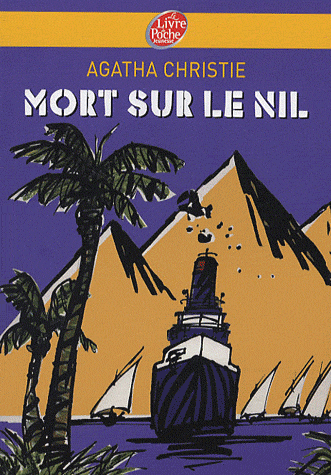
1. Mort sur le Nil : 

Author : Agatha Christie
Themes: Detective Work, Mystery.

Rating : 5.5/10

Mini-review : 
After reading "And there there were none", I'm afraid my expectations were high. Add to that the fact that I read this book throughout the duration of 3 months (because I was reading it in the bus when I can sit to read), you can get how it compiled up in my brain. There was no aspect of novelty in the Crime/Mystery cooking formula. Expect the very expected twist in the end, too.


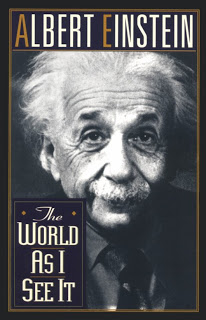
2. The World as I see it :


3. Wuthering Heights :


4. Lord of the Flies : 

Author : William Golding
Themes: Human nature, Good and Evil & Primal instinct, Social Satire, Hierarchy, Religion, Fear, Power-lust ...

Rating : 10/10

Mini-review : 
The best book I've had in a long time (clear in the Perfect Score, the first given since I started this blog).
When I started reading this book, I had no idea that in the end, I'd be changed by it. It's that kind of books that makes a difference in you as a human when you least expect it.
The books depicts the "adventures" of a swarm of kids who ended up in a deserted island in the complete absence of adults. It really grows from your average thriller story to a full-blown allegory of society, existentialism and even Life itself.
An inhibiting psychological portrayal of the human society painted with a brush of pessimism. Dark, spooky and somewhat disturbing (if you can really get into books), and a true work of wonder.
Definitely a reread is planned and a full review.


5. Fight Club :

Author : Agatha Christie
Themes: Anarchy, Unaccomplishment, Male portrayal, Violence, History, Psychology ..

Rating : 7/10

Mini-review : 
After watching the movie (that I rated 9/10 for the record), the novel didn't seem to exceed its pictured version. Although brilliant at times, the book leaves you with a bitter taste in your mouth and a lot of uncertainties. The ending was disappointing to some extent (unlike the movie) and supporting characters weren't given any depth. It's the kind of book that could have done better.


6. قنديل أم هاشم : 

Author : Yahya Haqqi
Themes: Various : Belief, Destiny, Freedom, Choice, Love ..

Rating : 9/10

Mini-review : 
I think I fell in love with short stories thanks to this work right here. Every story is a retake on an idea, a thought that the writer had at some point of his life, either by meeting a person or internalizing the possible scenarios in his head. I'm glad he got them on paper because they're brilliant.
The lack of ending and development is more redeemed by the pleasure of standing on a cliff, you guess an ending or imagine it or deduce it or even leave it behind .. It's entirely up to you.
Great use of symbols too (the stories themselves are symbols to draw a bigger image).


7. The Old Man and the Sea :

Author : Earnest Hemingway
Themes: Remembrance, Loneliness, Patience ..

Rating : 6.5/10

Mini-review : 
I give 6.5 to the experience of reading the work, not the work itself. It's always mentioned as one of the best novels of the English Language which, although relative, it usually means that the work have some literal value. Unlike most of the classics, I failed to see this value in this work, maybe because I was tired, maybe because the air was hot, or maybe because I just don't like this kind of books.
Reading this work felt exactly like the process of fishing (haha, Fisher .. Sea .. get it ? Okay), boring and not necessarily rewarding at the end.
Was that intended by the author ? If it was, then this novel deserves more credit.


8. خواطر شاب :

Author : Ahmad Al Shugairi
Themes: Thoughts. (translation of the title, very clever of me)

Rating : 8.5/10

Mini-review :
The book is a collection of mini-articles written by Ahmad Al Shugairi in diverse matters such as spirituality, mentality, politics, religion ..
I liked the book because at times it just put words to my thoughts! Maybe more precisely and with a studied intention but I felt myself mentally saying "I agree! .. Exaactly !".. which is cool.
Another thing I liked since the book is a promotion of the Islamic "lifestyle", the writer didn't pick up the "religious" tone anywhere throughout the book. It all laid in that sweet spot of "moderated Islam" and all it sought was a better understanding of the religion. It's a call for a change of paradigm, a gradual revolution of the mind and the soul first, that will eventually lead to the birth of the Islamic society as it should be, not as it unfortunately is.
I only wished the book was longer and had a stronger thematic orientation, but it's fine, really.


9. Of Mice and Men :

Author : John Steinbeck
Themes: Human Bonds, Travel, Loneliness, Morality and Mental Ability, Need ..

Rating : 9.5/10

Mini-review : 
The feels train hit me, and it hit hard.
Prepare yourself to the Roller-coaster of feelings that it "Of Mice and Men".
I loved the book since the very first pages, the brilliant writing style makes you feel acquainted to the two protagonist and takes off the need to dozens of pages of introduction and background. Lennie is straight-out adorable, with all the dorky air around him and the big-boy thing going on, very innocent and likeable (watch out). George is the contrast of Lennie. The two set on a journey that is bigger-than-life and inspiring.
I won't give out anything about the book, but sincerely, if you were awake enough while reading it, it will lead you silently to the ending you don't want to believe it's the ending.
BIG thumbs-up to the use of foreshadowing, it was a very bitter-sweet sensation of guessing and discovering that earned this novella a spot in my current top 5.
I actually felt something in the end, can you believe that ?

10. Les Fourberies de Scapin


Author : Molière
Themes: Greed, Destiny, Social Satire.

Rating : 8/10

Mini-review : 
For my first Molière, it's definitely a good one. I know now what "Comedy" as a genre stands for (I didn't finish any of the plays that were suggested in our Frnech program, so this one is a learning experience for me :p).
Well, what to say ? It's a funny play, a social satire sugarcoated in an amusing piece of literature. All the characters were caricaturized to exaggerated versions of their archetype, and the story wraps up hopefully making some points across.
One thing to confess : I'm still not ready to "literary" and "classic" works in french. Although this piece is a relatively simple and unsophisticated script, I really had bad time understanding it all, I deliberately left some pieces out because there were too many weird words for me to guess. Of course, that doesn't mean I won't try later. One baby step at a time.
I admit laughing like a dumb at some hilarious parts of the dialogue for some reason (well they're hilarious that's the reason) and that's something I'd like to have from time to time.


Well, those are my first 10 reads this Summer. I had a late start but screw it, it's a start.
I hope I can finish my second 10 before the end of this month because if not, well I'll fail myself.

I need to know why although I enjoy reading much more than lurking on Facebook and I still manage to switch the switches in my mind darn it.

vendredi 12 juillet 2013

8. Wuthering Heights


Name : Wuthering Heights
Writer : Emily Brontë
Publishing year :  1845
Language : English
Type : Recommended, Novel
Recommended by : Soukaina Mkhairi
Estimated time : Around 15 hours.
Main themes : Love, basically. Social Justice, Revenge, Karma, Family, Social classes, Human bonds, Human condition ..
Recommended for : Anyone who'd appreciate a love story with many subplots and many characters and great development.
The book in a few words : The story of two houses bound by space and time, and two families bound by love and hatred.
The synopsis : Mr. Lockwood occupies a new house, lone and isolated from human interaction. The little contact he had with the household of Wuthering Heights made him only curious of the story and history of the family and the place. Through the eyes and words of Nelly, the story unfolds ..


The Rating : Excellent 9/10  


The Review :
I'd start with a general complaint, maybe the only one I have in regard of this book : It is long, for a novel (said the guy who wanted to read The Brothers Karamazov). This fact coupled with my short attention span (that I'm not to be blamed for) and my relatively slow reading speed made me read the book in intervals, sometimes too long to keep the momentum of the action (if there were one) going. I had to regret that while seating 8 hours reading the second half of it at one take, in the unholy tiredness of this summer. As a result to that I made a resolution that I won't read any longs novels, at least for the rest of this month.

That being my reproach, now comes the praise.
The name of the book gave me many false expectations concerning the content of the book, because I, knowing that the book is set in a 19 century context, somehow pictured the heights mentioned in the title as some moral heights, something to do with honor and social hierarchy. It wasn't too long til I discovered that it's the name of a place. A place where many curious things happened and promise to happen.

The first thing that I admired in the classical piece was the choice of narrators : One, Mr. Lockwood, is a complete stranger through whom you, the stranger reader, are presented to every and each character with every detail a curious stranger needs, the other, Nelly, is kind of the opposite in role and knowledge, serves as the timeless witness of no less than three generations of love and loss in the neighbor lands of Yorkshire. She is, in addition to be the actual narrator of the story (on and off quotation marks), is an active, sentient character of the story. She was even granted enough intelligence and clairvoyance by Mrs. Brontë that she almost served as a omniscient narrator, for she was able in many recurrences to read into other characters' thoughts without even being objective. I thought it was a clever change in the narration department that is really hard to achieve without veering into either a loss of credibility as a narrator or being a narration tool (smartly being made interactive throughout the whole story), and the writer made it possible with great mastery.

The text somehow lacked description as it was theoretically all narrated by Nelly orally, and such lavish descriptions would be absurd and out of place if they were frequently presented.
The expressions and countenances of the characters, their accents and their sentiments, however, were perfectly transcribed by the author through the keen eyes of Nelly, leaving too little room to desire.

The language that I expected to be very 19-century-ish (thanks to Persuasion), was thankfully very nimble. The vocabulary was very rich and at times made me stop to retake sentences, but it was by no mean intrusive. The emphasis on verbs and feelings instead of circumstances made the story feel more liquid and more smooth.

In the characters' department, many were presented at the same time because of their studied resemblance, made the novel feel crowded at first. And I felt that this effect was deliberate because once the plot kicks off, you start to reminisce at the early presentations and hints given about every character.
By the second quarter of it, things started to clear out and every branch of every family was proven to be necessary to the growth of the story. It should be credited, however, that throughout the 400 pages of the novel, every character grew (or spoiler alert : died), at least through the eyes of Nelly. The change of states of characters was a beautiful work of improvised psychology, giving a real, odd and sinister depth to every character. There was a unique aspect to most of the character, like Joseph being instantly detestable, Nelly all the way trustworthy and poised to make up for the recklessness of the youngsters, and Heathcliff unearthly evil, and tortured beyond recovery. The part of the story were he was at full frenzy was almost scary!
I enjoyed it thoroughly.

The structure of the tale, however, is what won me over to add this to my 5/5 list.
Instead of a traditional, blooming story line that start with a simple integral description of the status quo that is soon to be disturbed and through successive events lead to a denouement, the story kicks off of an awkward position. The unwelcome narrator was pushed into the midst of a rising chaos, and only through the guidance of Nelly that he could put the pieces together. The non-linear telling of events was brilliant and done brilliantly, and the foreshadowing in the first chapters (Lockwood seeing Catherine's ghost, that was something.), much adding to the puzzlement, was spot-on.

The other element of the narration style was the creation of a vicious timely/karmic circle : History repeated itself in spite of all efforts to steer it or avoid it, and characters reappeared in new skins and new spirits. Catherine was reincarnated in Cathy, Edgar in Linton, Hindley in Heathcliff, Heathcliff in Hareton... The design laid by Brontë was of perfect proportions, and every character has its path to follow, and his aspiration to rise to, under all different motivations that fell into a one dichotomy : Love and Hatred.

Wuthering Heights is a love story tortured by the tempest of Hatred, or a hatred story blessed by the wind of Love. Either ways, it's a story of human endeavor: Rising and falling from grace, lacking power and being corrupt by it, withering by the sheer emotion of love or shaking under the great weight of guilt, loving and seeking love.


Favorite Character : 
Miss Ellen Dean, or simply Nelly.
At first, it was introduced as a mere storyteller : watchful, prudent and just. She was given a motivation to do so by the presence of Mr. Lockwood, the new owner of the house who needs company and some lines of gossip. Once the story advanced sufficiently, she took on a new role: that of being a character of her own presence. But then, she evolved into this ageless companion that not only lived through three generations but also became a mentor, a person of trust and an authentic event-maker. She was, for pure plot reasons, an easily trusted woman, and by this gift she later on gained an ability to judge both people and their intentions, but did so in a matter that you'll believe.
She was this character that always knew better, she had the necessary wisdom to block all greater evils and soothe out everything else. She was present at every crucial moment in both houses, and yet she kept her loyalty to her job first and the people who she loved second her only priority. She didn't only watch the rumble grow, she was the one, secretly, that pushed them to grow, either by direct effect as it is the case with all the children she reared or indirectly by influencing those one upon entering the life of the rest. She later on became so invested in those characters that her ultimate happiness was to see them tranquil and untroubled.
She was, as I said, doted with a lot of intelligence and wit, allowing her to draw conclusions and make decisions, decisions that her inexperienced, short-tempered masters couldn't take.
She kinda flipped her role as a servant inside-out, and for that she earned the title of the best character in the novel.


Favorite passages : 
"He would stand Hindley’s blows without winking or shedding a tear, and my pinches moved him only to draw in a breath and open his eyes, as if he had hurt himself by accident, and nobody was to blame. "

".. but they were calmer, and did not need me to console them. The little souls were comforting each other with better thoughts than I could have hit on: no parson in the world ever pictured heaven so beautifully as they did, in their innocent talk; and, while I sobbed and listened, I could not help wishing we were all there safe together."

"He possessed the power to depart as much as a cat possesses the power to leave a mouse half killed, or a bird half eaten"

".. so he shall never know how I love him: and that, not because he’s handsome, Nelly, but because he’s more myself than I am. Whatever our souls are made of, his and mine are the same; and Linton’s is as different as a moonbeam from lightning."

"It was a marvellous effort of perspicacity to discover that I did not love her. I believed, at one time, no lessons could teach her that! And yet it is poorly learnt; for this morning she announced, as a piece of appalling intelligence, that I had actually succeeded in making her hate me! A positive labour of Hercules, I assure you! "

"his lips devoid of their ferocious sneer, and sealed in an expression of unspeakable sadness. Had it been another, I would have covered my face in the presence of such grief. In HIS case, I was gratified; and, ignoble as it seems to insult a fallen enemy, I couldn't miss this chance of sticking in a dart: his weakness was the only time when I could taste the delight of paying wrong for wrong.'"

"'Now, my bonny lad, you are mine! And we'll see if one tree won't grow as crooked as another, with the same wind to twist it!''"

"..And help your own naughty pet and mine. It is not poisoned, though I prepared it. "

"Miss Linton, I shall enjoy myself remarkably in thinking your father will be miserable: I shall not sleep for satisfaction. You could have hit on no surer way of fixing your residence under my roof for the next twenty-four hours than informing me that such an event would follow." -Awesome.

"It was the same room into which he had been ushered, as a guest, eighteen years before: the same moon shone through the window; and the same autumn landscape lay outside."

"I know he has a bad nature,’ said Catherine: ‘he’s your son. But I’m glad I’ve a better, to forgive it; and I know he loves me, and for that reason I love him. Mr. Heathcliff YOU have NOBODY to love you; and, however miserable you make us, we shall still have the revenge of thinking that your cruelty arises from your greater misery. You ARE miserable, are you not? Lonely, like the devil, and envious like him? NOBODY loves you NOBODY will cry for you when you die! I wouldn’t be you!’"

"He had been content with daily labour and rough animal enjoyments, till Catherine crossed his path. Shame at her scorn, and hope of her approval, were his first prompters to higher pursuits; and instead of guarding him from one and winning him to the other, his endeavours to raise himself had produced just the contrary result."

"‘It is a poor conclusion, is it not?’ he observed, having brooded awhile on the scene he had just witnessed: ‘an absurd termination to my violent exertions? I get levers and mattocks to demolish the two houses, and train myself to be capable of working like Hercules, and when everything is ready and in my power, I find the will to lift a slate off either roof has vanished! [..] I have lost the faculty of enjoying their destruction, and I am too idle to destroy for nothing."